Yakuza Brush Font: A Detailed Evaluation for Authentic Japanese-Inspired Design
In the landscape of digital typography, finding a typeface that captures the raw energy of traditional calligraphy while maintaining modern legibility is a significant challenge. Yakuza emerges as a specialized brush display font designed to bridge this gap. It is not merely a decorative script; it is a tool crafted to replicate the imperfections and fluidity of natural handwriting with a distinct Japanese aesthetic. For designers working on projects ranging from motor club branding to martial arts promotions, the decision to use Yakuza involves understanding its specific strengths, its limitations in body text, and how it compares to other stylized fonts.
Understanding the Distinctive Character of Yakuza
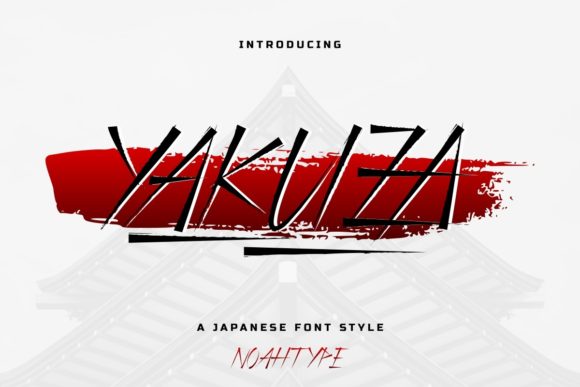
The primary appeal of Yakuza lies in its construction. Unlike standard vector fonts that rely on geometric precision, this brush font is meticulously crafted to look like it was created by hand. Every scratch, stroke variation, and ink bleed is intentional, mimicking the movement of a brush or marker across paper. This attention to detail gives the font a personal touch that is often missing in mass-produced typefaces.
What sets Yakuza apart is its ability to convey a specific cultural atmosphere without feeling cliché. The design evokes the spirit of Japanese street culture, traditional calligraphy, and the dynamic motion of combat sports. When a designer needs to inject a sense of urgency, rebellion, or artistic flair into a layout, this font provides a visual shorthand that users immediately recognize. It is particularly effective in scenarios where the "handmade" quality adds credibility to the message, suggesting that the work behind the design is authentic and passionate.
The Balance Between Artistry and Functionality
While the aesthetic is striking, the functional application of Yakuza requires careful consideration. As a display font, it is optimized for headlines, logotypes, and short phrases rather than long-form content. The varying stroke widths and organic edges can reduce readability when used at small sizes or in dense blocks of text. Therefore, the most effective designs pair Yakuza with clean, sans-serif body text. This combination allows the brush font to serve as the emotional anchor of the design while ensuring the information remains accessible to the reader.
Evaluating Yakuza Against Other Typography Styles
When selecting a font for a project involving Asian themes, action sports, or edgy branding, designers often face a choice between several categories: traditional serif scripts, generic graffiti fonts, and specialized brush fonts. How does Yakuza fit into this spectrum?
- Traditional Calligraphy Fonts: Many fonts attempt to replicate formal Japanese calligraphy (shodo). While elegant, these often feel too rigid or ceremonial for modern applications like video game interfaces or concert flyers. Yakuza offers a more contemporary, gritty alternative that feels less formal and more aligned with street culture.
- Generic Graffiti Fonts: Standard graffiti typefaces often prioritize complexity over clarity, resulting in letters that are difficult to decipher quickly. Because Yakuza is built on the structure of brush strokes rather than spray paint techniques, it retains better structural integrity. It conveys the same rebellious energy but with a level of sophistication that prevents the text from looking chaotic.
- Standard Handwriting Scripts: Everyday cursive fonts often look too neat or academic. They lack the aggressive weight and dynamic flow required for high-impact visuals. The special Japanese look of Yakuza ensures that the design stands out in niches related to karate, kung fu, or music genres that value intensity.
This comparison highlights that Yakuza occupies a unique niche. It is not a direct replacement for all brush fonts, nor is it suitable for every Asian-themed project. Its specific strength lies in its ability to balance the roughness of street art with the discipline of calligraphic forms.
Strategic Applications and Use Cases
The versatility of Yakuza makes it a strong candidate for various industries, provided the context matches the font's personality. Below are key areas where this typeface excels, along with practical considerations for implementation.
Motorsports and Action Sports
In the world of motor clubs, racing teams, and extreme sports, speed and aggression are central themes. Yakuza effectively communicates these values through its sharp angles and sweeping curves. It is an excellent choice for race car decals, team jerseys, and event posters. However, designers should ensure that the background contrast is high enough to maintain the visibility of the brush strokes, which can sometimes get lost against complex imagery.
Gaming and App Interfaces
For video games set in urban environments, fighting games, or apps focused on fitness and martial arts, Yakuza adds immediate thematic depth. Using it for character names, health bars, or mission titles can enhance the immersion. In app design, it should be used sparingly to avoid overwhelming the user interface. A balanced approach involves using the font for headers and icons while keeping navigation elements simple and neutral.
Music and Event Promotion
Concert posters, album covers, and festival flyers benefit greatly from the dynamic nature of Yakuza. The font's ability to mimic ink splatters and rapid brush movements creates a sense of rhythm and movement that aligns well with live performances. Whether promoting a rock band, a hip-hop artist, or a cultural festival, the font helps establish a mood of excitement and authenticity.
Decision Factors: When to Choose Yakuza and When to Look Elsewhere
Selecting the right typeface is rarely about finding the "best" font, but rather the best fit for the specific constraints of the project. To make an informed decision, consider the following tradeoffs and limitations.
Strengths of Yakuza
The font shines when the goal is to create an emotional connection through visual texture. It is ideal for projects that need to feel human-made rather than digitally generated. The detailed scratches and variations give the design a tactile quality that flat, uniform fonts cannot achieve. If your project targets an audience interested in Japanese culture, martial arts, or underground scenes, Yakuza is likely the most appropriate tool to convey the intended vibe.
Limitations and Considerations
Despite its strengths, Yakuza has clear boundaries. It is not suitable for legal documents, technical manuals, or any content requiring high readability over long periods. The stylistic choices that make it unique also make it tiring to read if overused. Additionally, because it is a display font, kerning (the space between letters) may require manual adjustment to ensure the words do not look disjointed. Designers must be prepared to tweak spacing manually to achieve a professional finish.
Furthermore, while the font captures a Japanese aesthetic, it is essential to ensure that the usage is respectful and contextually appropriate. Using a font associated with specific subcultures for unrelated commercial purposes can sometimes lead to a disconnect between the brand identity and the visual language. It is crucial to verify that the "Japanese look" aligns with the actual message being communicated.
Maximizing Impact Through Integration
To get the most out of Yakuza, integration is key. The font performs best when paired with complementary design elements. For instance, using textures like paper grain, ink splashes, or halftone patterns can enhance the brush effect. Similarly, color choices play a vital role; bold reds, deep blacks, and stark whites often work well to emphasize the high contrast of the brush strokes.
For invitations, cards, and social media posts, the font serves as a powerful hook. It draws the eye immediately, encouraging the viewer to engage with the content. However, the supporting text must remain understated. By letting Yakuza take center stage for the headline and relegating details to a simpler typeface, designers can create a hierarchy that guides the viewer's attention effectively.
Conclusion on Suitability
Yakuza is a specialized asset for designers who need to convey a specific blend of tradition, rebellion, and artistic expression. It is not a universal solution, but within its intended scope, it offers a level of authenticity and impact that few other fonts can match. By understanding its distinct characteristics, comparing it to broader categories of typography, and applying it to the right contexts, professionals can leverage Yakuza to create memorable and effective visual communications.
Ultimately, the decision to use this font depends on the project's goals. If the objective is to evoke the spirit of a fight club, a music festival, or a martial arts dojo, Yakuza is a compelling choice. If the priority is clarity and neutrality, other options may be more suitable. Like any tool, its value is determined by the skill and intent of the user.