Relasi Font: A Detailed Evaluation for Creative Projects
Selecting the right typography is often the most critical decision in a design project. It dictates the tone, readability, and overall emotional impact of the content. For designers working on vintage-inspired themes or projects requiring a bold, statement-making presence, Relasi has emerged as a compelling option. This brushed, thick lettered display font brings a distinct texture to the table that differs significantly from standard sans-serif or serif typefaces.
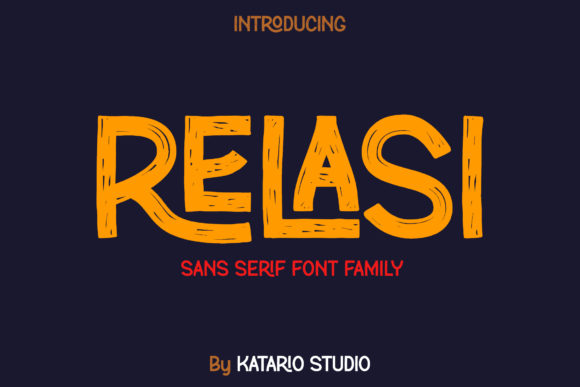
The core appeal of Relasi lies in its unique character. It is not merely a collection of letters; it is a textured element designed to be seen. The "brushed" quality suggests a hand-painted origin, while the "thick lettering" ensures legibility even at smaller sizes or when viewed from a distance. Understanding where this font fits within the broader landscape of design resources requires looking beyond simple aesthetics to consider practical application, versatility, and how it compares to other display options available today.
Understanding the Distinctive Character of Relasi
When evaluating a new typeface, the first step is to analyze its physical attributes. Relasi is classified as a display font, meaning it is intended for headlines, posters, logos, and large-scale text rather than body copy. Its defining feature is the brushstroke effect. Unlike vector fonts that rely on sharp, mathematical curves, Relasi incorporates irregularities that mimic the flow of a real brush hitting paper. This gives the text a sense of movement and organic imperfection.
The thickness of the strokes is another crucial factor. In a crowded visual environment, thin lines can get lost, but Relasi commands attention. The heavy weight provides a solid foundation for designs that need to feel robust and confident. This makes it particularly effective for titles where the goal is to grab the viewer's eye immediately. The vintage style mentioned in its description is not just a superficial look; it evokes a specific era of advertising and signage, reminiscent of mid-20th-century storefronts or retro packaging.
This combination of texture and weight creates a specific mood. It feels tactile, almost like you could reach out and touch the surface of the words. For designers looking to convey authenticity, craftsmanship, or a nostalgic vibe, Relasi offers a shortcut to that aesthetic without needing complex graphic overlays or distress effects. It integrates the texture directly into the letterforms, streamlining the workflow.
Comparing Relasi to Other Display Options
No single font is the perfect solution for every scenario. To determine if Relasi is the right tool, it is helpful to compare it against other categories of typography. Designers often choose between clean modern displays, traditional serifs, and decorative scripts. Where does Relasi sit in this spectrum?
Compared to modern geometric sans-serifs, which prioritize minimalism and clarity, Relasi is far more expressive. Geometric fonts are excellent for tech startups or corporate branding that wants to appear sleek and efficient. However, they lack the warmth and history that Relasi provides. If a project requires a futuristic or sterile look, Relasi would likely be too busy and dated. Conversely, if the goal is to evoke a sense of tradition or human effort, the geometric approach might feel too cold.
When compared to traditional serif fonts, such as Bodoni or Garamond, the distinction lies in the medium. Serifs often convey authority, elegance, and literary value. They are the standard for print media and formal documents. Relasi, with its brushed style, leans more towards casual, artistic, and commercial applications. While a serif font might be appropriate for a novel cover or a law firm website, Relasi is better suited for a craft brewery label, a music festival poster, or a boutique fashion brand.
There is also the comparison to script and handwritten fonts. Many designers seek a personal touch and turn to cursive styles. However, scripts can sometimes be difficult to read if the letter connections are too intricate. Relasi offers a middle ground. It retains the personality of handwriting through its brush strokes but maintains the structural integrity of block letters. This makes it more versatile for situations where readability is paramount but a standard font feels too rigid.
Tradeoffs and Limitations
Every design choice involves tradeoffs. The very features that make Relasi attractive—its thickness and texture—can also present challenges. Because the font is so visually dominant, it cannot be used for long passages of text. Using Relasi for body copy would overwhelm the reader and reduce comprehension. It is strictly a headline tool.
Another limitation to consider is the level of detail in the brush strokes. Depending on the resolution of the output, fine details in the edges of the letters might blur or pixelate. This is a common issue with any heavily textured font. When planning a project, one must ensure that the final output format supports high-resolution rendering. For web use, this might require using image fallbacks or ensuring the screen density is sufficient to preserve the texture.
Furthermore, the vintage aesthetic is a double-edged sword. While it works beautifully for retro-themed projects, it can clash with ultra-modern or minimalist designs. A designer aiming for a "clean" look might find the rough edges of Relasi to be a distraction. It is essential to evaluate the surrounding design elements. Does the rest of the layout support the ruggedness of the font, or will it create visual noise?
Best-Fit Situations for Relasi
Despite these limitations, there are numerous scenarios where Relasi shines. Its ability to fit a variety of creative ideas stems from its balance between structure and freedom. One of the strongest use cases is in branding for artisanal products. Whether it is coffee roasters, handmade soap, or local bakeries, the brushed style communicates care and manual production. It signals to the consumer that the product was made by hands, not just machines.
In the realm of event marketing, Relasi is equally powerful. Concert posters, art gallery openings, and community festivals often benefit from a font that feels energetic and spontaneous. The thick lettering ensures that the event name is readable from a distance, while the vintage style adds a layer of cultural context that resonates with adult audiences aged 20 to 50 who appreciate nostalgia.
Another practical application is in packaging design. On a shelf cluttered with uniform, glossy boxes, a package featuring the textured look of Relasi stands out. The contrast between the smooth background and the rough typography creates visual interest. This is particularly effective for limited edition releases or special collections where the design needs to feel exclusive and crafted.
When to Choose an Alternative
While Relasi is a strong contender, it is not the only answer. There are times when a different approach is necessary. If the target audience is primarily Gen Z or younger demographics who prefer digital-native aesthetics, a more streamlined, flat design might be more appropriate. Younger audiences often associate heavy textures with older design trends, whereas they gravitate toward crisp, high-contrast, and dynamic layouts.
Additionally, if the project requires a global reach where cultural nuances are important, caution is needed. The specific "vintage" look of Relasi is rooted in Western design history. In markets where this aesthetic does not resonate or is associated with outdated practices, a more neutral or contemporary font might yield better results. The goal is to connect with the audience, and if the font creates a barrier of confusion or disinterest, it should be set aside.
Finally, consider the technical constraints. If the project involves low-bandwidth environments or mobile-first designs where file size and loading speed are critical, a font with heavy texture data might add unnecessary bulk. In such cases, a simpler display font that achieves a similar boldness without the complex edge detailing might be the more pragmatic choice.
Making the Final Decision
Evaluating a font like Relasi requires looking at the entire ecosystem of the project. It is not enough to simply admire the letterforms; one must test them in context. The best way to decide is to create mockups. Place Relasi alongside your logo, your imagery, and your supporting text. Does it harmonize? Does it overpower? Does it communicate the intended message clearly?
Confidence in a design comes from knowing why a choice was made. If you choose Relasi, do so because its brushed, thick lettering aligns with the story you are telling. If you find that it distracts from the content or clashes with the brand identity, then it is not the right fit, regardless of how much you love the font itself. The key is to add it confidently to your projects only when it serves the greater purpose of communication.
Ultimately, Relasi offers a distinctive voice in the crowded world of typography. It bridges the gap between the mechanical and the handmade, offering a vintage style that remains relevant for modern creative ideas. By understanding its strengths, acknowledging its limitations, and comparing it thoughtfully against other options, designers can make informed decisions that elevate their work. Whether used for a bold headline or a striking logo, Relasi has the potential to deliver results that resonate with viewers seeking authenticity and character.