Agharti Font Evaluation: Bold Condensed Display for Modern Design
In the landscape of digital and print typography, selecting the right typeface is often the difference between a design that feels generic and one that commands attention. Agharti has emerged as a distinct option within this category, specifically tailored for users seeking a bold, condensed display font. This evaluation explores the characteristics of Agharti, its practical applications, and the strategic considerations designers should weigh before integrating it into their workflow.
Understanding the Agharti Typeface
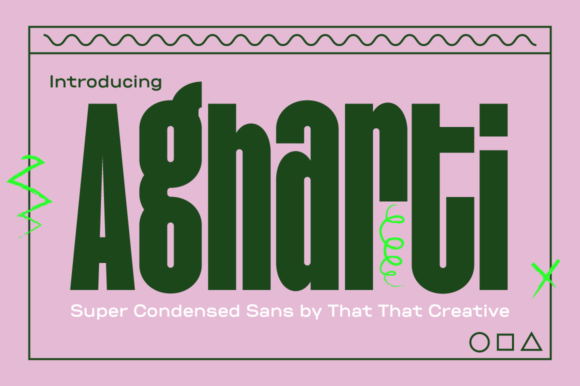
Agharti is defined primarily by its geometric structure and assertive presence. As a display typeface, it is engineered not for body text but for high-impact scenarios where legibility at large scales and immediate visual recognition are paramount. The "condensed" nature of the font allows designers to fit more horizontal space into headlines without sacrificing the weight or impact of the letterforms.
The defining characteristic of Agharti is its personality. Unlike neutral sans-serif fonts that aim for invisibility, Agharti introduces a specific mood. Its forms are tight and angular, creating a sense of urgency and modernity. This makes it particularly suitable for contexts where the design needs to break through visual noise quickly. It is not a subtle tool; it is an instrument designed to be seen and read immediately.
Strategic Applications and Use Cases
When evaluating whether to incorporate Agharti into a project, it is essential to identify the specific environments where its attributes provide the most value. The following scenarios represent the strongest fits for this typeface:
- Logo Design: The condensed width and bold weight make Agharti an excellent candidate for brand marks. Logos often require a compact footprint while maintaining a strong identity. Agharti provides a solid foundation for logotypes that need to appear stable and confident across various sizes.
- Web Page Headlines: On modern web interfaces, space is at a premium. Agharti allows for impactful headers that do not consume excessive vertical real estate. This efficiency is crucial for landing pages, hero sections, and navigation bars where clarity and speed of reading are critical.
- Print Headlines: In magazine layouts, posters, and editorial designs, the ability to create hierarchy through size and weight is vital. Agharti's assertive form creates a clear distinction between the headline and the supporting text, guiding the reader's eye effectively.
- Marketing Materials: For promotional campaigns, event flyers, and social media graphics, the font's energetic quality can enhance the call to action. It conveys a sense of innovation and forward-thinking that aligns well with tech, fashion, and lifestyle brands.
Benefits of Choosing Agharti
Selecting a specialized display font like Agharti offers several tangible benefits for a design project. First, it enhances visual hierarchy. By using a font with such a distinct character for headings, designers can instantly separate content layers, making complex information easier to scan.
Secondly, Agharti contributes to brand differentiation. In a market saturated with standard system fonts like Arial or Helvetica, using a unique typeface helps establish a memorable visual identity. The specific contours of Agharti add a layer of sophistication that generic fonts lack, allowing the design to feel curated and intentional.
Additionally, the versatility within constraints is a key advantage. Because the font is condensed, it solves layout challenges where wide letter spacing would look awkward or where vertical space is limited. Designers can achieve a full-width look in a narrow column, maintaining the integrity of the design grid.
Tradeoffs and Critical Considerations
While Agharti offers significant advantages, no single typeface is universally applicable. Understanding the limitations is just as important as recognizing the strengths. The primary tradeoff involves readability over extended lengths. Due to its bold weight and condensed structure, Agharti can cause eye fatigue if used for paragraphs or long-form content. It lacks the open counters and gentle curves typically found in body text fonts, which are necessary for sustained reading comfort.
Another consideration is the contextual appropriateness. The assertive nature of Agharti may be too aggressive for certain industries. For example, in healthcare, legal services, or financial institutions where trust, calmness, and neutrality are prioritized, a font with a softer or more traditional demeanor might be a safer choice. Using Agharti in these contexts could inadvertently convey a tone of aggression rather than professionalism.
Designers must also consider pairing strategies. Because Agharti is so dominant, it requires a complementary font that does not compete for attention. Typically, a clean, neutral sans-serif or a classic serif works best as a counterbalance. Failing to pair it correctly can result in a design that feels unbalanced or visually chaotic.
Situations Where Alternatives May Be Preferred
There are specific scenarios where exploring alternatives to Agharti is advisable. If the goal is to create a minimalist aesthetic that relies on whitespace and subtle typographic nuances, Agharti might overpower the composition. In such cases, a lighter weight or a more refined display font might better serve the design intent.
Furthermore, for projects requiring extensive multilingual support, it is crucial to verify the character set coverage. Some display fonts have limited glyph sets compared to major system fonts. If the project targets a global audience with diverse language requirements, a font with broader Unicode support might be a more practical decision than Agharti.
Finally, when working on responsive web design, performance and rendering consistency across different browsers and devices are factors. While Agharti is generally well-behaved, testing its rendering on mobile screens is essential. If the condensed nature of the letters causes them to blur or overlap at small viewport widths, a more flexible alternative should be considered.
Decision-Making Insights for Designers
To determine if Agharti aligns with your specific goals, start by defining the emotional tone of your project. Ask yourself: Does the message require energy, strength, and modernity? If the answer is yes, Agharti is a strong contender. If the message requires subtlety, warmth, or tradition, you may need to look elsewhere.
Practical testing is the most reliable method for evaluation. Create mockups using Agharti for headlines and a neutral font for body text. Review these designs in context, considering both digital and print mediums. Pay attention to how the font interacts with images, colors, and other graphical elements. Does it enhance the overall composition, or does it dominate it?
Ultimately, the decision to use Agharti should be driven by the functional needs of the layout and the psychological impact desired for the audience. It is a powerful tool for designers who understand how to leverage its assertive form to create compelling, modern visuals. When applied with intention and paired correctly, Agharti transforms static layouts into dynamic communication pieces that resonate with viewers.
By carefully weighing the benefits against the potential limitations, designers can make informed choices that elevate their work. Whether for a bold logo, a striking web header, or a high-impact print campaign, Agharti offers a robust solution for those ready to embrace a distinctive typographic voice.