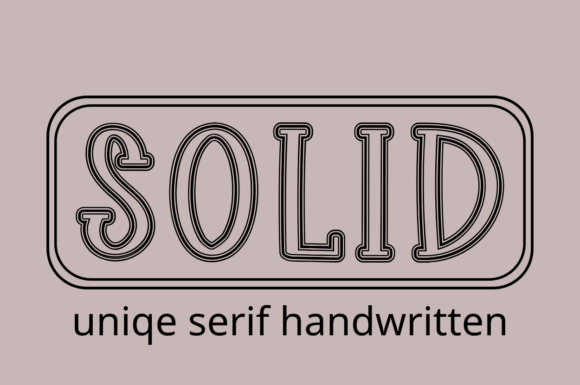
Solid: The Display Font That Redefines Visual Impact
In the crowded landscape of digital design, where every pixel competes for attention, finding a typeface that commands respect without shouting is an art form. Solid has emerged as a compelling solution for designers, creators, and business owners who demand more than just legibility from their typography. It is a simple and sharp looking display font, designed with a specific intent: to truly inspire your works. Unlike traditional serif or sans-serif families that often blend into the background, Solid stands out, offering a unique character that transforms ordinary layouts into memorable experiences.
The Essence of Simplicity and Sharpness
At its core, Solid is built on the principle of clarity. In an era of visual noise, simplicity is a luxury. This font achieves a balance between geometric precision and human warmth. The "sharp" aspect of its design refers not to harsh edges, but to the confident, decisive strokes that define each letterform. When you look at the capital 'A' or the bold 'S', you see a structure that is both modern and timeless.
This sharpness serves a functional purpose. It ensures that headlines and key messages cut through clutter. Whether you are designing a mobile app interface, a printed brochure, or a full-scale website, the clarity of Solid allows your content to be read instantly. It removes the cognitive load associated with deciphering complex or overly stylized fonts, allowing the user to focus entirely on the message being conveyed.
Why Designers Are Turning to Solid
The shift toward using Solid in professional portfolios and commercial projects is driven by its versatility. While many display fonts are limited to specific eras or moods—often feeling too retro or too futuristic—Solid occupies a neutral yet powerful space. It feels authoritative enough for corporate branding but creative enough for artistic expression. This duality makes it a favorite among professionals who need a single font family to handle diverse tasks within a project.
- Visual Hierarchy: The distinct weight variations help establish clear information architecture.
- Brand Identity: Its unique shape creates a recognizable signature for businesses.
- Readability: Despite its display nature, it maintains high legibility even at smaller sizes when used correctly.
Exploring Endless Possibilities in Application
The true value of Solid lies in its adaptability. It is not merely a tool for decoration; it is a strategic asset for communication. By exploring its endless possibilities, creators can elevate the perceived quality of their work. Let's examine how this font performs across different mediums and scenarios.
Digital Interfaces and Web Design
In the realm of web development, the first impression is often determined by the headline. A generic font can make a site feel temporary or unpolished. Solid, however, adds an immediate layer of sophistication. Imagine a landing page for a tech startup or a portfolio for a freelance photographer. Using Solid for the main title creates a strong anchor point that draws the eye immediately. The sharp angles guide the viewer's gaze down the page, encouraging them to explore the content further.
Furthermore, for online users navigating on mobile devices, the crisp lines of Solid render beautifully on high-resolution screens. The spacing (kerning) is optimized to prevent letters from merging or looking disjointed, ensuring a smooth reading experience regardless of the device size.
Print Media and Branding Materials
While digital screens have become dominant, print remains a powerful medium for tangible connection. Business cards, brochures, and packaging all benefit from the presence of Solid. The "simple" aspect of the font translates exceptionally well to print, where ink density and paper texture play crucial roles. The sharp edges of the letters hold up well against various printing techniques, from offset to digital printing, maintaining their integrity without bleeding or losing definition.
For business owners looking to rebrand, switching to a font like Solid can signal a shift toward a more modern, efficient, and forward-thinking identity. It suggests that the company values precision and directness.
Editorial and Content Creation
Content creators, including bloggers and magazine editors, often struggle to find a font that supports long-form reading while still offering style. Solid shines when used for pull quotes, section headers, and captions. It breaks the monotony of standard body text without overwhelming the reader. When paired with a clean, understated body font, Solid acts as a perfect companion, adding rhythm and visual interest to the layout.
- Magazine Covers: The bold presence of Solid demands attention, making it ideal for cover lines and feature titles.
- Book Titles: Publishers use it to give books a contemporary edge that appeals to modern readers.
- Social Media Graphics: In the fast-paced world of social media, visuals must stop the scroll. Solid provides the impact needed to capture attention in seconds.
Evaluating Suitability for Your Projects
Before integrating Solid into a workflow, it is essential to understand its strengths and limitations. No single font is a universal solution, and knowing when to use it—and when to avoid it—is part of professional expertise.
Strengths to Leverage
The primary strength of Solid is its ability to convey confidence. If your goal is to present information with authority and clarity, this font is an excellent choice. It excels in scenarios where brevity and impact are paramount. For example, a tagline for a fitness brand or a call-to-action button on an e-commerce site benefits greatly from the font's assertive nature.
Additionally, its geometric foundation makes it highly scalable. You can stretch it for massive billboards or shrink it for small icons, and it will retain its structural integrity. This scalability is crucial for responsive design, where a single asset might need to perform across dozens of screen sizes.
Considerations and Limitations
However, users should be mindful that Solid is a display font. This classification means it is primarily intended for large sizes and short bursts of text. It is generally not recommended for long paragraphs of body copy. Trying to read a 500-word article set entirely in Solid would likely cause eye strain and reduce comprehension. The sharp features, while stylish, can become fatiguing over extended periods of reading.
Another consideration is the context. Because Solid is so distinctive, it carries a specific mood. It may feel too rigid or cold for brands aiming for a soft, organic, or whimsical image. In such cases, a more rounded or script-based font might be more appropriate. The key is to match the font's personality with the brand's voice.
Practical Guidance for Implementation
To get the most out of Solid, creators should follow a few best practices. First, pair it wisely. Since Solid is a strong visual element, it pairs best with neutral, highly readable sans-serif fonts for body text. This contrast ensures that the design remains balanced and accessible.
Second, pay attention to whitespace. The sharp lines of Solid create a sense of tension and energy. Giving these letters ample room to breathe prevents the design from feeling cramped. Use generous margins and padding around headings to let the font's geometry shine.
Finally, test your designs in grayscale. Sometimes color can distract from the fundamental structure of a typeface. If Solid looks good in black and white, it will look great in any color palette. This step helps ensure that the hierarchy of your design relies on form and weight rather than just color cues.
Conclusion: Inspiring Your Next Work
Ultimately, typography is the voice of your design. It speaks before a single word is read. Solid offers a voice that is clear, confident, and inspiring. Whether you are a seasoned graphic designer looking to refresh your toolkit, a business owner wanting to elevate your brand's image, or a creator seeking to make your online content stand out, this font provides the foundation you need.
By understanding its characteristics and applying it thoughtfully, you can unlock new levels of creativity in your projects. It is not just about choosing a pretty font; it is about choosing a tool that empowers your vision. As you explore its endless possibilities, remember that the best designs are those where the typography serves the message, enhancing the user's experience rather than distracting from it. With Solid, you have a versatile partner ready to help you build something impactful, sharp, and undeniably solid.