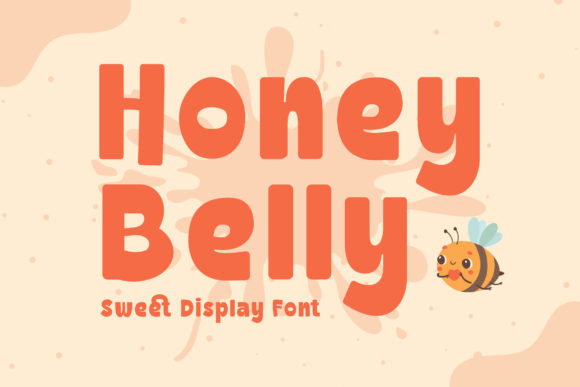
Honey Belly: A Bold Display Font for Creative Projects That Need Impact
In the crowded landscape of digital design and print media, finding a typeface that commands attention without sacrificing readability is a constant challenge. Honey Belly emerges as a distinct solution for designers seeking a bold and thick lettered display font that brings immediate energy to their work. This typeface is not merely a collection of characters; it is a visual statement designed to anchor creative concepts and elevate them from static text to dynamic experiences.
When evaluating typography for a project, professionals often weigh factors like legibility, tone, and versatility. Honey Belly occupies a specific niche within the display category. Its defining characteristic is its substantial weight and rounded, approachable geometry. Unlike standard serif or sans-serif fonts that prioritize neutrality, this font is engineered to be noticed. It serves as a tool for creators who want their ideas to resonate with an audience immediately upon contact.
Distinguishing Features of Honey Belly
The primary distinction of Honey Belly lies in its structural integrity and visual presence. As a bold and thick lettered display font, it utilizes heavy strokes that create a sense of volume and substance. This thickness is not just about size; it is about the relationship between the black ink (or pixels) and the white space. The letters are constructed to feel solid, almost tactile, which gives them a unique personality compared to thinner alternatives.
Furthermore, the character of this font is inherently friendly yet assertive. The rounded terminals and generous counters (the enclosed spaces within letters like 'o' or 'e') soften the impact of the heavy weight, preventing the text from feeling aggressive or imposing. This balance makes it particularly effective for branding, posters, and headlines where a message needs to be both welcoming and authoritative. When applied to a creative concept, the font acts as a catalyst, transforming a simple idea into something that feels alive and ready for engagement.
Visual Weight and Readability
One of the most common concerns when selecting a heavy display font is whether it remains readable at smaller sizes or in long passages. With Honey Belly, the design philosophy prioritizes headline usage over body copy. The thick lettering ensures high visibility from a distance, making it ideal for large-format printing such as billboards, banners, and signage. However, for extended reading, the density of the strokes can become visually tiring if used incorrectly. Designers must recognize that this font excels in short bursts of information—titles, subheads, and key phrases—rather than paragraphs of text.
The contrast between the thick strokes and the open negative space creates a rhythm that guides the eye. This rhythmic quality helps in breaking up complex information, allowing the viewer to digest content in manageable chunks. In this way, Honey Belly does more than just display text; it structures the hierarchy of information, ensuring that the most important elements stand out naturally.
Evaluating Alternatives and Comparison Factors
Choosing the right typeface often involves comparing options across different categories. When looking at similar bold display fonts, several variables come into play, including style consistency, licensing flexibility, and the specific emotional resonance of the letterforms. While there are many heavy fonts available on the market, they often lean towards sharp angles, industrial grit, or retro revivalism. Honey Belly offers a different path by combining thickness with a softer, more organic feel.
Designers frequently evaluate fonts based on how well they fit the brand identity. If a project requires a logo that feels sturdy but approachable, a standard blocky sans-serif might feel too rigid. Conversely, a thin script font would lack the necessary weight. Honey Belly sits comfortably in the middle ground, offering the stability of a geometric structure with the warmth of a hand-drawn aesthetic. This makes it a strong contender for brands in the food, lifestyle, children's products, and creative agency sectors.
- Style Consistency: Does the font maintain its character across all weights? Honey Belly is optimized for its bold state, ensuring that every letterform carries the same level of confidence.
- Versatility: Can the font adapt to different layouts? Its thick lines allow it to hold up against busy backgrounds and images better than finer lines.
- Tone Matching: Does the font convey the intended emotion? The "Honey" aspect of the name suggests sweetness and smoothness, which is reflected in the curved edges of the glyphs.
When comparing Honey Belly to other options, it is essential to consider the context of the medium. For screen-based designs, the rendering of thick fonts can sometimes lead to pixelation if not properly hinted. However, modern web font technologies have mitigated many of these issues, allowing Honey Belly to perform well on high-resolution displays. Print designers, on the other hand, will appreciate how the thick strokes interact with different paper stocks, creating a rich texture that adds depth to the final product.
Best-Fit Situations and Decision Factors
Understanding when to use Honey Belly is just as important as knowing what it looks like. The decision to incorporate this font should be driven by the specific goals of the project. It is particularly well-suited for campaigns that aim to grab attention quickly. Whether it is a social media graphic, a magazine cover, or a promotional flyer, the bold nature of the font ensures that the message cuts through the noise.
For businesses looking to establish a memorable identity, using a distinctive display font can be a strategic move. Honey Belly allows for customization while maintaining a cohesive look. By pairing it with cleaner, lighter body fonts, designers can create a striking contrast that enhances overall readability and aesthetic appeal. This combination leverages the strengths of both typefaces: the boldness of the display font draws the eye, while the neutral body text provides clarity.
However, there are limitations to consider. Because of its strong personality, Honey Belly can overpower a design if used excessively. Using it for every heading or decorative element can lead to visual fatigue, causing the user to disengage. The key is moderation. Use the font to highlight the core message and let other elements support it. Additionally, while the font is versatile, it may not be suitable for formal contexts such as legal documents, academic papers, or corporate reports where understated elegance is preferred.
Practical Applications in Design
To illustrate the potential of Honey Belly, consider a few realistic scenarios. A coffee shop launching a new seasonal blend might use the font for the main poster headline. The thick, inviting letters mirror the richness of the coffee, while the rounded shapes suggest comfort and relaxation. Similarly, a tech startup creating a landing page for a fun, user-friendly app could use the font for call-to-action buttons. The boldness encourages clicks, and the friendly shape reduces friction for the user.
In packaging design, the font's ability to stand out on a shelf is invaluable. Products competing for attention in a crowded aisle benefit from the high contrast provided by thick lettering. The font can be manipulated in terms of color and layout to create a dynamic effect without losing its fundamental character. This adaptability makes it a valuable asset for marketers and designers alike.
Navigating Tradeoffs and Limitations
No single font is a universal solution, and Honey Belly is no exception. While it excels in display applications, it lacks the subtlety required for detailed technical work. Designers must be aware of the tradeoffs involved in choosing a font with such a strong voice. The primary limitation is the potential for reduced legibility in small sizes or low-contrast environments. If the background is dark and the text is not sufficiently light, the thick strokes may blur together, creating a muddy appearance.
Another consideration is the availability of variations. Some font families offer extensive ranges of weights, from ultra-light to extra-bold, providing maximum flexibility. Honey Belly is primarily focused on its bold and thick presentation. While this focus ensures a high-quality execution of its specific style, it may require pairing with other fonts to achieve a full typographic palette. Designers should plan their projects accordingly, ensuring they have access to complementary typefaces that can handle body text and secondary information.
Despite these limitations, the benefits often outweigh the drawbacks when the project demands impact. The decision to use Honey Belly should always be rooted in the specific needs of the audience and the message being conveyed. By carefully considering the context, designers can harness the power of this bold and thick lettered display font to create work that is not only visually stunning but also effective in communicating its intended purpose.
Ultimately, the choice of typography is a critical component of the design process. It sets the tone, establishes the mood, and influences how the audience perceives the content. Honey Belly offers a unique opportunity to inject creativity and life into a project. By understanding its strengths and limitations, designers can make informed decisions that lead to successful outcomes. Whether used for a personal blog, a commercial campaign, or a community event, the right application of this font can turn ordinary ideas into extraordinary visual experiences.