Herrington: The Bold Font for Kids' Branding
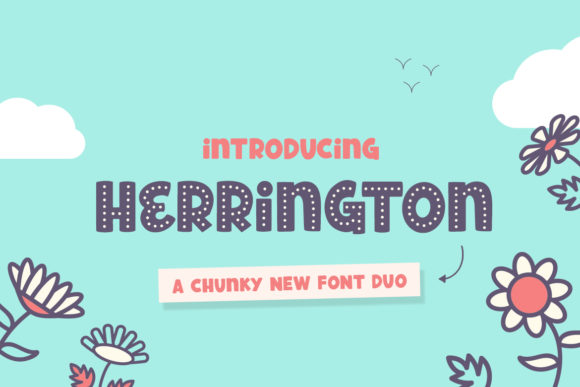
When you are designing a logo for a new toy store, creating a poster for a children's birthday party, or developing an educational app for toddlers, the visual language you choose matters more than almost anything else. Herrington is not just another typeface; it is a bold and thick lettered display duo font designed to command attention with its substantial weight and playful character. This specific combination of thickness and style makes it particularly effective when paired with bright colors, creating an immediate sense of energy and fun that resonates deeply with young audiences.
For professionals in marketing, education, and small business ownership, selecting the right typography can be the difference between a design that feels generic and one that captures imagination. Herrington offers a distinct advantage by bridging the gap between readability and personality. Its heavy strokes ensure that headlines remain legible even from a distance, while its unique structure invites engagement. Whether you are a freelancer pitching a campaign to a client or an educator preparing materials for a classroom, understanding how to leverage this tool can significantly elevate your creative output.
Why Structure Matters in Children-Themed Design
The world of children's content requires a delicate balance. You need visuals that are engaging enough to hold a child's interest but clear enough to convey important information to parents. This is where the specific characteristics of Herrington come into play. As a display duo, it typically comes with two variations—one often slightly more rounded or standard, and the other perhaps with more exaggerated curves or angles—allowing designers to create hierarchy without switching typefaces.
Consider a scenario where you are designing a menu for a family-friendly restaurant. If you use a thin, elegant serif font, the text might look sophisticated but fail to grab the attention of a child pointing at their favorite meal. Conversely, if you use a font that is too jagged or chaotic, it might feel aggressive rather than inviting. Herrington sits perfectly in the middle. Its bold and thick lettering provides a solid foundation that feels safe and sturdy, yet the inherent "duo" nature allows for dynamic contrast. When combined with bright primary colors like electric blue, sunshine yellow, or vibrant red, the font doesn't just sit on the page; it pops out, mimicking the excitement of a playground or the joy of opening a gift.
Practical Applications for Professionals
Entrepreneurs launching kid-focused brands often struggle with finding a voice that stands out in a crowded marketplace. A common mistake is relying on overused clipart or standard system fonts that lack personality. By integrating Herrington into your branding strategy, you signal immediately that your product is tailored for a younger demographic. For instance, a blogger writing about parenting hacks could use Herrington for their main headers to break up long walls of text and make the article feel more approachable and less academic.
Educators face similar challenges. Creating worksheets, flashcards, or presentation slides for young students requires typography that supports learning without causing fatigue. The thickness of Herrington ensures that letters are easily distinguishable, which is crucial for early readers who are still mastering letter recognition. When used for titles on a classroom bulletin board or the cover of a storybook, the font acts as a visual anchor, guiding the eye and setting a tone of enthusiasm for the lesson ahead.
- Marketing Campaigns: Use Herrington for social media graphics promoting summer camps or toy sales. The bold weight cuts through the noise of busy feeds, ensuring your message is seen.
- Event Planning: Organizers of birthday parties or school events can use the font for invitations and banners. It creates a festive atmosphere instantly, especially when printed on colorful cardstock.
- Publishing: Authors of children's books can utilize the duo aspect to differentiate between narrative text (if using a lighter variant) and dialogue or sound effects, adding a layer of interactivity to the reading experience.
Enhancing Communication Through Visual Hierarchy
One of the most significant benefits of using a specialized display font like Herrington is the ability to control the flow of information. In design, hierarchy dictates what the viewer looks at first. Because Herrington is inherently bold and thick, it naturally draws the eye before any other element. This allows creators to prioritize key messages without needing excessive size adjustments or decorative elements.
Imagine you are a small business owner creating a flyer for a local kids' yoga class. You have three main pieces of information: the name of the class, the time, and the price. By using Herrington for the class name, you establish it as the hero of the design. You can then use a simpler, thinner sans-serif font for the details. This contrast not only looks professional but also helps parents scan the flyer quickly to find the information they need. The thick letters of Herrington act as a beacon, reducing the cognitive load required to process the visual layout.
This principle extends to digital interfaces as well. Apps designed for children often rely on large buttons and clear icons. Incorporating Herrington into the user interface for menus or achievement badges can make the app feel more tactile and rewarding. The "thick" nature of the letters gives them a physical presence, almost like building blocks, which aligns perfectly with the way children interact with the world around them.
Strategic Color Pairing for Maximum Impact
The prompt mentions that Herrington is perfect when combined with bright colors, but there is a strategic reason behind this. The high contrast between the dark, heavy strokes of the font and vivid backgrounds creates a psychological effect known as "visual salience." This is essential for capturing the fleeting attention spans of children. However, it is important to apply this wisely.
While bright colors are effective, they must be balanced to avoid visual clutter. A good rule of thumb is to let the font do the heavy lifting. If you are using Herrington in a neon green, keep the background a deep purple or black to maintain readability. If the background is white, opt for a deep blue or orange for the text. The goal is to create a harmonious relationship where the color enhances the form of the letters rather than competing with them. This thoughtful approach prevents the design from looking chaotic and instead presents a polished, intentional brand identity.
Navigating Limitations and Fit Considerations
While Herrington is a powerful tool for specific applications, it is not a universal solution. Every font has its place, and recognizing where it fits—and where it does not—is a mark of a knowledgeable designer. Herrington is a display font, meaning it is intended for headlines, logos, and short phrases. It is generally not suitable for body text, especially in longer articles or legal documents. Trying to read a paragraph set entirely in a bold and thick lettered font like Herrington would cause eye strain and reduce comprehension.
Furthermore, the "boldness" of the font means it can feel overwhelming if overused. If every line of your design is in Herrington, the impact is lost because nothing stands out anymore. Effective design relies on contrast. To get the most out of this typeface, pair it with clean, neutral fonts that provide a resting place for the eye. This is particularly relevant for professionals who want to maintain credibility while appealing to a younger audience. A parent might trust a website more if the design feels organized and balanced, rather than purely cartoonish.
Additionally, users should consider the context of their project. If you are designing for a serious educational institution or a medical clinic serving children, the playful nature of Herrington might need to be toned down or used very sparingly. In these cases, it might serve better as a subtle accent rather than the primary voice. Always test your designs in different sizes and mediums. What looks impressive on a large banner might become illegible on a small mobile screen thumbnail if the letter spacing isn't adjusted correctly.
Supporting Creativity and Efficiency
Ultimately, the value of Herrington lies in how it simplifies the creative process. Instead of spending hours searching for custom illustrations or trying to manipulate standard fonts to look "fun," having a dedicated display duo like Herrington at your disposal accelerates your workflow. It provides a pre-packaged solution for the aesthetic challenges common in children's design.
For freelancers and agencies, this efficiency translates directly into profitability. Clients appreciate designers who understand their needs and can deliver results quickly. Knowing that Herrington is the go-to choice for "kids themes" allows you to make confident recommendations during consultations. You can explain to a client that this font will help their brand connect emotionally with families, potentially increasing conversion rates for their products or services.
In conclusion, Herrington represents a strategic asset for anyone working in the space of children's design. Its bold, thick lettering combined with the versatility of a duo font offers a unique opportunity to create memorable, engaging, and effective visual communications. By understanding its strengths, pairing it thoughtfully with bright colors, and respecting its limitations, professionals can leverage this typeface to solve real-world problems, support their goals, and bring a touch of joyful creativity to their projects.