Pasgal: A Genuine Display Font for Modern Urban Design
In the crowded landscape of digital typography, finding a typeface that balances distinctiveness with genuine readability is often a challenge. Many fonts attempt to be trendy by simply adding noise or exaggerating forms, but they frequently fail to deliver lasting value. Pasgal enters this space not as another gimmick, but as a carefully constructed display font designed to bring a sense of urban authenticity and playful character to your projects. It stands out because it avoids the pitfalls of forced novelty, offering instead a clean, well-marked structure that feels both contemporary and approachable.
For professionals ranging from freelance designers to small business owners, the choice of a font is rarely just aesthetic; it is a functional decision that impacts brand perception and user engagement. Pasgal addresses this need by providing a versatile tool that works effectively in high-impact scenarios without sacrificing legibility. Its design philosophy centers on clarity and charm, making it an ideal candidate for creators who want their work to feel current without appearing chaotic or unprofessional.
Understanding the Character and Structure of Pasgal
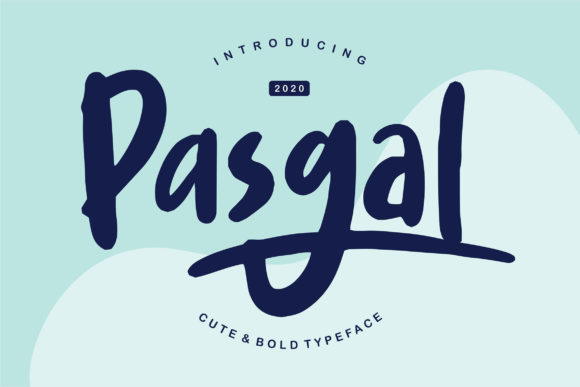
The defining feature of Pasgal lies in its well-marked characters. In typographic terms, this means that the strokes, terminals, and counter spaces are distinct and clearly defined, preventing visual confusion even at smaller sizes or lower resolutions. This structural integrity is crucial when using display fonts, which are often stretched, compressed, or placed over complex backgrounds. Unlike some trendy fonts that rely on thin lines or delicate serifs that break down easily, Pasgal maintains its presence.
The "cute" descriptor often associated with Pasgal does not imply childishness. Instead, it refers to a specific quality of softness and friendliness embedded in the letterforms. The curves are rounded, and the weight distribution suggests a welcoming attitude rather than an aggressive one. This makes it particularly effective for brands that wish to communicate approachability while maintaining a modern edge. The font manages to walk the line between serious and playful, a balance that is difficult to achieve but essential for many lifestyle, creative, and educational projects.
When examining the x-height and spacing, Pasgal demonstrates a thoughtful approach to kerning and tracking. The letters sit comfortably next to one another, creating a rhythm that guides the eye naturally across headlines and titles. This consistency ensures that the text remains readable even when used in all-caps or bold weights, which is a common requirement in urban design contexts where visibility is paramount.
Why Well-Marked Characters Matter in Practice
The practical implications of having well-defined characters cannot be overstated. In real-world applications, such as mobile app interfaces, social media graphics, or website headers, fonts must perform under various lighting conditions and screen densities. Pasgal's clear distinction between similar shapes—such as 'o' and 'c', or 'i' and 'l'—reduces cognitive load for the viewer. This subtle detail contributes significantly to the overall effectiveness of a design.
Furthermore, the robust nature of the glyphs allows for greater flexibility in layout. Designers can experiment with tight tracking for a compact, poster-like look or generous leading for a more breathable, editorial feel without losing the identity of the typeface. This adaptability is a key strength for freelancers and agencies who need a single font family to handle diverse client requirements, from event posters to branding guidelines.
Applying Pasgal to Urban and Trendy Design Contexts
The description of Pasgal as the ideal choice for urban or trendy designs stems from its ability to capture the energy of city life while retaining a human touch. Urban design often demands a font that feels raw, energetic, and immediate. Pasgal delivers this through its slightly irregular yet controlled geometry, which mimics the organic chaos of street culture without descending into illegibility.
Consider a scenario where a local coffee shop wants to revamp its menu board or a startup needs a landing page that feels innovative yet trustworthy. In these situations, Pasgal serves as a bridge between the corporate world and the creative underground. It provides the visual punch needed to grab attention in a scrolling feed, yet it possesses enough substance to anchor a brand identity. The font's personality allows it to stand alongside established geometric sans-serifs while offering a unique twist that sets the project apart.
For marketers and content creators, the versatility of Pasgal extends to various mediums. It performs exceptionally well in large-scale print applications like billboards and signage, where its strong form factor ensures visibility from a distance. Conversely, it translates well to digital screens, where its clean lines prevent pixelation issues and maintain crisp edges. This dual capability makes it a reliable asset for businesses that operate across both physical and digital channels.
Real-World Use Cases and Performance
To understand the true utility of Pasgal, one must look at how it functions within a workflow. For educators and publishers, the font offers a way to make learning materials or blog posts more engaging without compromising authority. A textbook cover or a course header using Pasgal can signal that the content is modern and accessible, encouraging students or readers to engage more deeply.
Similarly, for entrepreneurs launching new products, Pasgal can help craft packaging that feels boutique and curated. The font's cute yet genuine nature adds a layer of warmth to product labels, differentiating them from sterile, mass-market alternatives. In the realm of event planning, whether for a tech conference or a community festival, Pasgal provides the visual language necessary to convey excitement and inclusivity simultaneously.
However, it is important to note that no single font is a universal solution. While Pasgal excels in display roles, it may not be the optimal choice for long-form body text in certain contexts. Its distinctive character might become fatiguing if used excessively over hundreds of words. Therefore, the most effective strategy involves pairing Pasgal with a neutral, highly legible sans-serif or serif for body copy. This combination leverages the strengths of both typefaces: the personality of Pasgal for headlines and the reliability of a standard font for reading.
Evaluating Quality, Reliability, and Long-Term Value
When assessing a font for professional use, factors such as file organization, character set completeness, and rendering consistency are critical. Pasgal appears to be built with these considerations in mind. A comprehensive character set that includes various accents and symbols is essential for global audiences, and a well-structured file ensures smooth integration into design software like Adobe Creative Cloud or Figma.
The reliability of Pasgal also extends to its longevity. Trends in typography shift rapidly, but fonts rooted in solid design principles tend to remain relevant longer. Because Pasgal avoids extreme stylistic flourishes that date quickly, it offers a degree of timelessness. It captures the spirit of the current moment without being bound by fleeting fads. This makes it a sound investment for brands looking to establish a visual identity that will endure.
From a usability perspective, the font supports a range of weights and styles, allowing for hierarchical differentiation in design. Whether you need a heavy weight for impact or a lighter variant for subtlety, the consistency of the design language ensures that the variations feel cohesive. This internal consistency is what separates a professional-grade typeface from a novelty collection.
Who Benefits Most from Pasgal?
While Pasgal has broad appeal, it is particularly valuable for specific segments of the creative community. Freelance designers working with startups and small businesses will find its friendly tone aligns well with the need to build trust quickly. Marketers and content strategists will appreciate its ability to cut through the noise of social media feeds while maintaining a polished look.
Bloggers and publishers focused on lifestyle, travel, or personal development topics can use Pasgal to create a distinct voice that resonates with their audience. The font's genuine nature helps foster a connection with readers, making the content feel more personal and less corporate. Even hobbyists involved in DIY projects or community initiatives can leverage Pasgal to produce materials that look professionally crafted without requiring advanced technical skills.
In conclusion, Pasgal represents a thoughtful addition to the typographic toolkit. It combines the visual appeal of a trendy display font with the structural integrity required for professional application. By prioritizing well-marked characters and a balanced personality, it offers a practical solution for those seeking to inject urban energy and genuine charm into their designs. For anyone looking to elevate their visual communication without resorting to generic templates, Pasgal provides a compelling option that delivers on both style and substance.