Nipok: A Typeface That Bridges Decades of Design
In the ever-evolving landscape of digital and print design, finding a typeface that strikes the perfect balance between nostalgia and modern functionality can feel like searching for a needle in a haystack. Nipok emerges as a compelling solution for creators who need more than just standard text; it is a display typeface designed to make a statement while maintaining readability. By weaving together the playful curves of the mid-20th century with the structured lines of the late 20th century, Nipok offers a unique visual identity that resonates across various industries.
Whether you are a business owner looking to revamp your brand's visual language, a web designer seeking a standout headline font, or a hobbyist creating personal projects, understanding the nuances of this single-weight font is essential. This guide explores what makes Nipok distinct, how its specific design features translate into practical applications, and why it might be the missing piece in your next creative project.
The Fusion of Eras: A Unique Design Philosophy
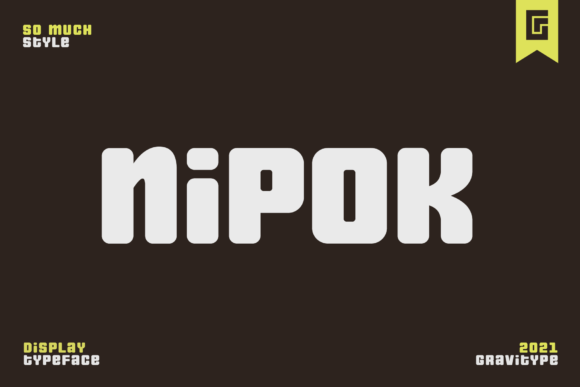
Design history often cycles back on itself, but few fonts manage to capture multiple eras so seamlessly. Nipok is not merely a retro throwback; it is a sophisticated amalgamation of aesthetic movements from the 1960s through the 1990s. The core of its charm lies in its rounded terminals and playful intersections, which are direct references to the optimistic, bubbly styles of the '60s and '70s. These elements evoke a sense of approachability and fun, making the text feel friendly and inviting.
However, the design does not stop at softness. To ensure the typeface remains legible and professional in modern contexts, Nipok incorporates straight and compact lines characteristic of the '80s and '90s. This juxtaposition creates a dynamic tension that keeps the eye engaged. It prevents the font from feeling too whimsical for serious content while avoiding the sterility often associated with strictly geometric sans-serifs. The result is a font that feels both familiar and fresh, capable of adapting to diverse brand voices without losing its character.
The Art of Unicase Harmony
One of the most defining characteristics of Nipok is its semi-unicase structure. In traditional typography, uppercase letters are used for emphasis, acronyms, or headings, while lowercase letters form the body of the text. Nipok challenges this convention by alternating upper and lower case letters within words to fill empty spaces and create visual harmony. This technique, often referred to as unicase, removes the vertical rhythm of standard text, resulting in a block-like appearance that is highly effective for headlines, logos, and short display text.
This alternation is not random; it is carefully calculated to maximize space efficiency and aesthetic balance. When used correctly, Nipok creates a solid, cohesive shape that draws attention immediately. For designers working on tight layouts or needing to fit large text into small spaces, this feature provides a significant advantage. It allows for bold statements that occupy less vertical real estate than traditional all-caps text, making it ideal for mobile interfaces where screen space is at a premium.
Unlocking Creative Potential with Alternates and Glyphs
While the default look of Nipok is striking, the true power of the typeface lies in its extensive library of stylistic options. The font includes a comprehensive set of alternates, giving users the flexibility to tweak the mood of their designs without switching typefaces. These variations allow for subtle shifts in tone, enabling a designer to make a logo look slightly more formal or a poster feel even more playful with a single click.
- Stylistic Flexibility: The included alternates extend the Ascent and Descent metrics beyond the standard semi-unicase limits. This means you can introduce more traditional height variations when the design calls for a different flow, offering a bridge between the unique unicase style and conventional typography.
- PUA Encoding: One of the most practical aspects of Nipok is its Private Use Area (PUA) encoding. This technical feature ensures that all glyphs, swashes, and special characters are accessible with ease. Unlike some custom fonts that require complex software plugins to access every variation, PUA encoding allows these characters to be treated like standard keys on a keyboard, streamlining the workflow for designers and developers alike.
For professionals who value efficiency, the ability to access every glyph quickly can save hours of manual adjustment. Whether you need a specific swash to finish a logo mark or an alternate character to fix a kerning issue, Nipok provides the tools necessary to achieve a polished look without unnecessary friction.
Practical Applications Across Industries
The versatility of Nipok makes it suitable for a wide range of use cases. Its blend of retro charm and modern structure allows it to fit into contexts where other fonts might feel out of place. Below are several scenarios where Nipok shines, demonstrating its adaptability to different needs.
- Brand Identity and Logos: For startups and established businesses alike, a logo needs to be memorable. Nipok's unique unicase structure creates a distinctive wordmark that stands out in a sea of generic sans-serifs. The mix of curves and straight lines can convey a brand that is both innovative and grounded.
- Editorial and Magazine Design: Headlines in magazines and blogs often require a font that commands attention without overwhelming the reader. Nipok serves as an excellent choice for pull quotes, section headers, and article titles. Its compact nature allows editors to maintain a clean layout while adding a touch of personality.
- Web and App Interfaces: In the digital realm, screen real estate is valuable. The space-saving nature of the unicase design makes Nipok particularly useful for navigation bars, buttons, and hero sections on websites. It ensures that messages are clear and impactful even on smaller mobile screens.
- Event Marketing and Posters: Concert flyers, festival posters, and event invitations often rely on typography to set the mood. Nipok's '60s and '70s influences bring a nostalgic energy that pairs well with music, art, and cultural events, while the '80s and '90s elements keep it relevant for contemporary audiences.
Evaluating Suitability for Your Project
Before integrating Nipok into a project, it is important to consider its limitations and strengths. As a single-weight display typeface, it is not intended for long-form body copy. The alternating case structure can reduce readability over extended paragraphs, potentially causing eye strain for readers. Therefore, the best practice is to use Nipok for short bursts of text where impact is prioritized over volume.
Additionally, because of its specific aesthetic, it may not align with brands seeking a minimalist, ultra-modern, or corporate serious look. If your goal is to project absolute neutrality, a standard geometric sans-serif might be a better fit. However, if you want to inject warmth, creativity, and a sense of history into your communication, Nipok is an invaluable asset.
Maximizing Value Through Strategic Usage
To get the most out of Nipok, designers should focus on pairing it wisely. Since the font is visually busy due to its unique shapes and alternates, it works best when paired with a simple, neutral body font. A clean sans-serif or a classic serif can provide the necessary contrast to let Nipok take center stage without competing for attention.
Furthermore, leveraging the PUA encoded swashes can elevate a design from good to exceptional. Using a swash on a key letter in a logo or a headline can add a custom touch that feels bespoke. Because these glyphs are easily accessible, there is no reason to avoid experimenting with them. Trying different combinations of the standard glyphs and alternates can lead to unexpected and delightful design solutions.
Ultimately, Nipok represents a thoughtful approach to typography. It acknowledges that design is not just about conveying information but also about evoking emotion and connecting with the audience on a deeper level. By combining the playful spirit of the past with the functional demands of the present, it offers a tool that is as practical as it is beautiful.
Conclusion
In a world saturated with generic fonts, Nipok offers a refreshing alternative that balances historical inspiration with modern utility. Its unique semi-unicase structure, combined with a rich array of alternates and easy-to-access glyphs, makes it a powerful choice for designers, creators, and businesses looking to stand out. Whether you are crafting a bold logo, designing a vibrant poster, or optimizing a website header, Nipok provides the visual vocabulary needed to tell your story effectively.
By understanding its strengths and applying it thoughtfully, you can harness the full potential of this distinctive typeface. It is not just a font; it is a design strategy that invites creativity and encourages a fresh perspective on how text can shape our digital and physical environments.